The Surprising Joy of Looking Back at Your Worst Photos
There was a time when photography came with a built in sense of suspense. Back in the film era, you did not get instant feedback. You took your shots, finished the roll, and handed it off for processing. Then you waited. And when that envelope finally came back, it was a moment of truth.
If you were not a professional, it was usually a pretty mixed bag. A few images might feel like small victories, but most of them often missed the mark. Blurry moments, exposures that were too bright or too dark, and compositions that did not quite match what you had in your head. It was common to feel that initial wave of disappointment.
But something interesting tended to happen over time. After the shock wore off, you would look at those same photos again with fresh eyes. And occasionally, some of those “bad” shots started to grow on you. You could see what you were trying to do. You could feel the intention behind the image, even if the execution fell short.
Then digital photography changed everything. Suddenly, you could see your photo seconds after taking it. You could adjust your settings and try again. And if you really did not like a shot, you could delete it immediately and move on. In theory, this should mean that our photo libraries are better than ever. Cleaner. More polished. Free of mistakes.
But there is a hidden downside to that convenience.
When you delete every imperfect photo, you also erase part of your learning process.
That is why I want to make the case for holding on to your worst photos, especially while you are still growing as a photographer. Storage is cheap. Digital space is forgiving. There is no real cost to creating a private collection of images that are just for you. No one else ever has to see them.
But one day, you might want to.
Recently, I came across a photo I took back in 2009, well before I made the decision to take photography seriously. It was captured on one of those early consumer digital cameras that handled everything automatically. The kind of camera that has mostly disappeared now that phones have taken over that role.
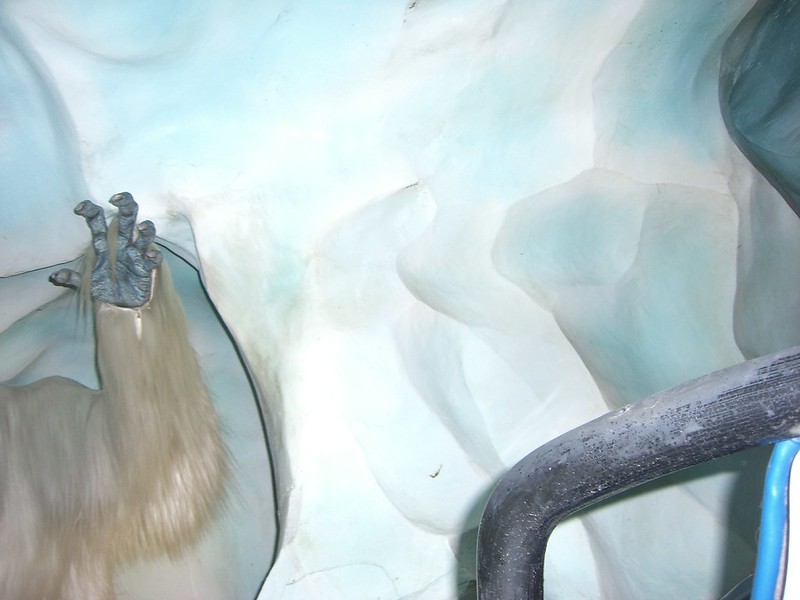
I was on the Matterhorn Bobsleds at Disneyland, clearly trying to capture a shot of Harold the Yeti as our ride vehicle rushed past him. What I ended up with was his arm, part of the padded handlebar, and a whole lot of missed opportunity. It is honestly a small miracle that anything in that frame is even in focus.
Looking at the metadata now, I can see that the camera fired the flash automatically. On a ride, that is a big mistake. At the time, I probably did not even realize it was happening.
When I rediscovered that photo recently, I had to laugh. Not because it was good, but because I could so clearly see what I was trying to do. The intention was there. The execution just was not.
And that is where the value lives.
That one image is a reminder that shooting from a moving ride vehicle is not easy. Timing matters. Preparation matters. Understanding your subject matters. The photo lacks a clear subject because I missed the moment. You cannot quite tell what the focus was supposed to be. Was it the Yeti? The ride vehicle? Something else entirely? I can tell you it was the Yeti. The rest just happened to be what I got instead.
Is it a photo I would ever print? Not even close.
But if I had deleted it back then, I would have lost more than just a bad image. I would have lost a piece of my story. I would have lost a lesson. And I definitely would have missed out on the laugh I got when I saw it again all these years later.
There is another reason to keep those early misfires. Your skills will evolve. The editing tools you use will improve. The techniques you learn over time might allow you to revisit an image you once thought was beyond saving and bring something new out of it. That kind of growth is only possible if you give your future self something to work with.
So instead of hitting delete, consider creating a space for those photos. Tuck them away. Let them sit. Let them age.
Then come back to them later.
You might find a lesson. You might find a spark of creativity. Or you might just find a moment that makes you smile because of how far you have come.
If you are up for it, I would love to see some of those moments from your own journey. Come join the Fairy Tale Photo Academy Theme Park Photography community on Skool and share a few of your “failed” photos that you do not mind putting out into the world. Sometimes the shots that did not go as planned tell the best stories of all.


