The Spirit of Halloween: Capturing the Magic After Dark
Have you ever walked past a Halloween display during the day and thought it was nice, only to come back after dark and discover that it has become something entirely different?
That's one of the things I love about photographing Halloween displays. The decorations might not change, but the moment the lights come on, the whole scene can take on a new personality.
A static figure that seemed fairly ordinary in daylight can suddenly feel mysterious, dramatic, and almost alive after the sun goes down. It's as if the spirit of Halloween has been waiting for darkness to arrive before making its entrance.
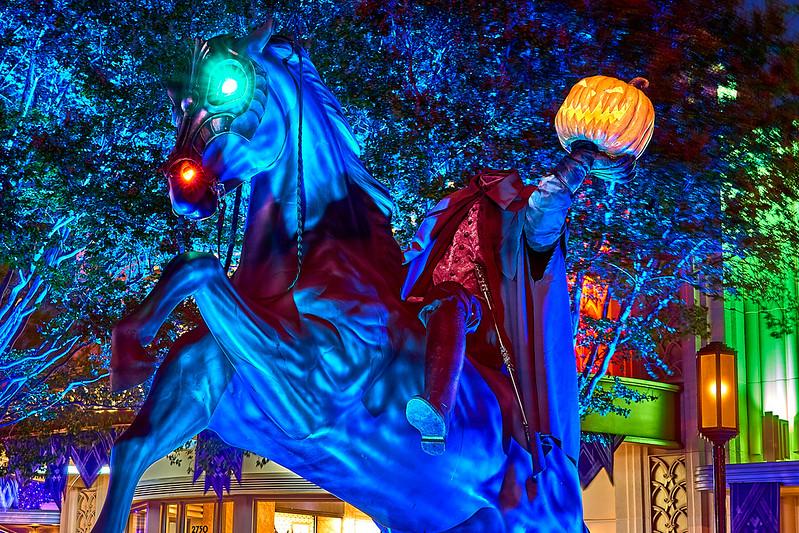
Take this photograph of the Headless Horseman. During the day, the figure might catch your attention, but after dark, the dramatic lighting transforms the entire scene.
The horse is bathed in intense blue light, while the glowing orange jack o' lantern creates a striking contrast. The green lighting in the background adds another layer of color, helping the scene feel as though it belongs in a spooky nighttime story.
But look a little closer at the horse's face.
I happened to capture the light shining from its eye and nostril in a way that created starburst patterns in my long exposure. Those tiny details add something special to the photograph, drawing your attention to the horse's expression and making the figure feel even more alive.
The display itself was static. The horse wasn't moving, and the Headless Horseman wasn't riding off into the night. Yet the lighting, colors, and little details combined to create a scene that feels full of energy and atmosphere.
That's one of the great opportunities of night photography. You aren't simply recording what something looks like. You're capturing the way light transforms how we experience it.
I'm still amazed at how early Halloween season seems to arrive each year. Many theme parks begin their Halloween celebrations in mid August, giving us weeks or even months to explore their seasonal decorations and nighttime displays.
While it's tempting to visit during the day, I encourage you to return after dark if you want to discover a different side of those decorations.
The transition into evening can be especially rewarding. During golden hour, the remaining sunlight can add warmth to the scene while the display lighting begins to stand out. You might capture the decorations against a colorful sunset sky, creating a combination of natural and artificial light that you simply won't find later in the evening.
Then comes blue hour, when the sun has dipped below the horizon but the sky still holds shades of blue. This can be a wonderful time to photograph illuminated displays because the sky retains some color while the artificial lights become more prominent.
And don't assume the opportunities end when blue hour is over. Many Halloween displays are illuminated well into the night, so you can continue exploring and photographing long after the sky has turned dark. Sometimes, that deeper darkness is exactly what you need to make the lights, colors, and spooky details stand out.
One of my favorite ways to photograph illuminated Halloween displays is with a long exposure.
A tripod is particularly helpful here. It allows you to keep the camera steady while the shutter remains open longer, making it possible to capture details in darker scenes without relying on flash.
That can be especially useful for static displays like the Headless Horseman. With the camera mounted on a tripod, you can experiment with longer shutter speeds and see how the lights render in your photograph.
You might even discover starburst patterns around small, bright light sources, depending on your lens, aperture, and the characteristics of the lights themselves. That's exactly the kind of detail I was fortunate to capture in the horse's eye and nostril.
If you use a tripod, consider using a remote shutter release or your camera's self timer. Pressing the shutter button can introduce a little vibration, and allowing the camera to settle before the exposure begins can help keep the image sharp.
One important consideration is whether the display itself is moving. A static figure is a great candidate for a long exposure, but a display with animated figures, moving parts, or color changing lights can behave differently. Experiment with your shutter speed to see how the movement and changing light affect the result.
Long exposures also give you a way to photograph nighttime displays without using flash. That's worth remembering when you're photographing in theme parks. Flash can disrupt other guests and performers, and parks may restrict its use around certain attractions and shows. Always follow the park's photography rules and any instructions from cast members or staff.
With a little patience and a steady camera, the existing lights can provide all the illumination you need.
One of the best things about this type of photography is that you can practice it right in your own neighborhood.
Every year, some homeowners go all out decorating their front yards for Halloween. You'll find elaborate displays with skeletons, glowing pumpkins, eerie lighting, fog, and sometimes entire scenes built around a particular theme.
These displays can be wonderful subjects for nighttime photography, and you don't need to travel far to find them.
Try visiting during golden hour to see how the decorations look in the remaining sunlight. Return during blue hour to capture the contrast between the sky and the lights. Then, if the display is still illuminated later in the evening, experiment with longer exposures.
Look for small details that might otherwise go unnoticed. A glowing eye, a colored light shining through a skeleton's ribs, or a pumpkin casting shadows across a wall can become the focal point of a photograph.
You can also experiment with your viewpoint. Photograph from lower down to make a figure feel more imposing, or change your position to place the decorations against a more interesting background.
And remember that you don't need to capture the entire display in one photograph. Sometimes, isolating one small detail creates a stronger image than trying to include everything.
Just be respectful of homeowners and their property. Photograph from public areas or places where you have permission to be, and avoid blocking walkways or disturbing anyone enjoying the display.
For me, the magic of Halloween photography comes from discovering how dramatically a scene can change when the sun goes down.
A decoration that seemed ordinary during the day can become mysterious after dark. Colors become more intense, shadows deepen, and small sources of light can become the details that draw us into the photograph.
The next time you visit a theme park during Halloween season, or spot an elaborate display in your neighborhood, consider making a second visit after dark.
Give yourself time to explore. Watch how the lighting changes. Look for those little details that suddenly stand out, and don't be afraid to experiment with a different angle or a longer exposure.
You might discover that the most interesting photograph isn't waiting for you in the daylight at all. It's waiting for the sun to go down.
I'd love to see what you've been photographing this Halloween season. Have you captured an elaborate theme park display, a spooky neighborhood scene, or a little detail that came alive after dark?
Come join us in the Fairy Tale Photo Academy community on Skool and share your Halloween photographs and the stories behind them. Let's see how everyone is capturing the spirit of the season, exchange ideas, and inspire one another to look at familiar scenes in new ways.
After all, there's a whole different world waiting to be photographed once the lights come on.


