The Secret to Getting Good Photos on Dark Rides
Dark rides are one of the most immersive experiences you will find in a theme park. These indoor attractions guide you through a series of scenes that build a story as your ride vehicle moves from one moment to the next. Some are short and simple, while others unfold over a longer journey filled with layered storytelling.
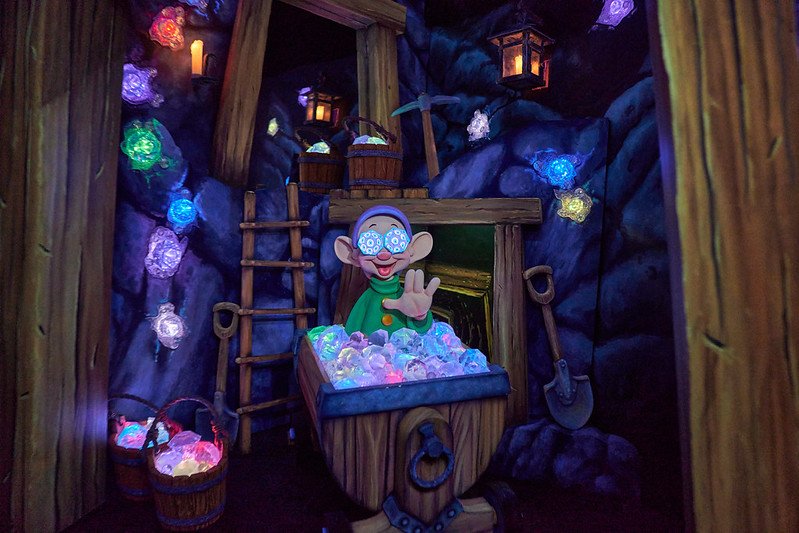
If you have ever ridden something like Haunted Mansion or Snow White's Enchanted Wish, you already know how visually rich these experiences can be. You will pass everything from flat painted sets to detailed three dimensional environments enhanced with lighting effects and screens that pull you deeper into the story.
And if you have ever tried to photograph them, you also know how challenging they can be.
Lighting is the biggest factor. Some scenes are bright enough to work with, while others push even the most capable cameras to their limits. Add in the fact that you are moving the entire time, and suddenly what feels easy to look at becomes very difficult to capture.
Before even thinking about technique, it is worth acknowledging that not everyone approaches these rides the same way. If your focus is on capturing memories of your friends and family, you might not feel the need to photograph the scenes themselves. But if you are building a collection of images that document the artistry of a park, dark rides quickly become one of the most rewarding challenges you can take on.
There are also practical considerations. Most parks ask guests not to use flash, and for good reason. It breaks immersion and affects the experience for everyone around you. Some attractions have also become stricter about phone use, especially on rides where movement could cause devices to slip or fall. Being mindful of your surroundings and respecting those guidelines is part of the process.
Once you are ready to try capturing these scenes, positioning matters more than people expect. If you are using a phone or a camera with a bright screen, sitting behind other guests can help minimize distractions for those around you. It also keeps your setup a little more discreet so you are not drawing attention during the ride.
Stability matters just as much. A wrist strap or neck strap is a simple step that can save you from losing your camera mid ride. These vehicles can jostle more than you expect, and it only takes one unexpected movement to turn a good idea into a bad moment.
From a technical standpoint, dark rides are a balancing act. You need enough light to expose the scene, but you also need a shutter speed fast enough to avoid blur as your vehicle moves. That often means increasing your ISO, which introduces noise into the image. It is not ideal, but it is part of the trade off. A slightly grainy photo is still better than one that is too dark to use.
Gear can make a difference, especially in low light. Cameras with larger sensors tend to perform better when light is limited. If you are using an interchangeable lens camera, prime lenses are often a better choice since they allow more light in than most zoom lenses. That extra light can make a noticeable difference in how usable your photos turn out.
At the same time, your choice of focal length shapes the story your photo tells. Wider lenses make it easier to capture an entire scene, but they can make subjects feel smaller and more distant. Tighter lenses bring you closer to the action, but they also narrow your field of view. In a dark environment, that can make it harder to quickly frame what you want before the moment passes.
That timing aspect is what makes dark ride photography so challenging and so rewarding. You are constantly reacting. You are anticipating where the next scene will appear and trying to be ready before it is fully in front of you.
It is also why these rides are such a great training ground. They force you to make quick decisions about exposure, framing, and timing all at once. Over time, that practice carries over into other types of photography in ways you might not expect.
Even when you do everything right, your photos may still need a little help afterward. Editing can bring back some of the detail lost in the shadows and help balance the overall exposure. It is often the final step that turns a decent shot into one you are actually proud to keep.
And when you do get one that works, it feels earned.
There is something uniquely satisfying about capturing a moment from a dark ride that reflects what you saw and felt in that space. It is not easy, and that is exactly why it is worth trying.
So next time you find yourself on a dark ride, consider giving it a shot. Be patient with yourself. Expect a few misses along the way. And when it comes together, you might end up with a photo you did not think was possible.
If you do, I would love to see it. Come join the Fairy Tale Photo Academy Theme Park Photography community on Skool and share your favorite dark ride photos. It is a great place to compare techniques, swap ideas, and see how others are tackling the same challenge.


