The Art of Dual Holidays: How Disney Bridges Halloween and Christmas
While most theme park attractions stay the same year-round, Disneyland’s Haunted Mansion Holiday proves that two holidays can happily share the same space. Installed in August as part of Disneyland’s Halloween transformation, this Nightmare Before Christmas-themed overlay manages to span both seasons—remaining in the park all the way through early January.
For two glorious “in-between” weeks after Halloween and before Christmas officially begins, Haunted Mansion Holiday quietly becomes the bridge between seasons. While pumpkins vanish and Christmas trees begin to appear, Jack Skellington and friends keep the spirit of celebration alive.
It’s more than just festive décor—it’s smart park management. With its high-capacity omnimover system, the attraction helps absorb crowds while other rides like it’s a small world temporarily close to receive their own Christmas makeovers. The result? A seamless transition where the park never loses its magic, even as it changes overnight.
Shooting the Mansion: Challenges and Rewards
As a photographer, though, this is no easy shot. The Haunted Mansion Holiday is a “dark ride” through and through—low light, continuous motion, and plenty of visual complexity. Getting crisp photos can feel like a boss-level challenge, but with the right approach, it’s one of the most rewarding experiences for any theme park photographer.
If you’re using a cell phone or point-and-shoot camera, remember that low light will test the limits of smaller sensors. The good news? The holiday overlay is brighter than the standard version, which makes it more forgiving. Just remember one golden rule—never use flash. It ruins the mood for everyone, washes out the detail that makes the attraction so beautiful, and could get you ejected from the park.
For those shooting with interchangeable-lens cameras, your best friend will be a “fast” prime lens—something with a wide aperture (like f/1.4 or f/1.8). Full-frame sensors handle the low light best, but crop sensors can still deliver great results with practice.
Your three main controls are:
Shutter Speed – Controls how long light hits your sensor. Go too slow, and you’ll blur the scene.
Aperture – The wider it opens, the more light you capture.
ISO – Boosts sensitivity to light but also adds digital noise, so keep it as low as possible.
Before the ride starts, set your ISO and aperture, then adjust shutter speed scene by scene. Think of it as a mini-game—balancing light, motion, and timing as your doom buggy rolls along.
What to Capture
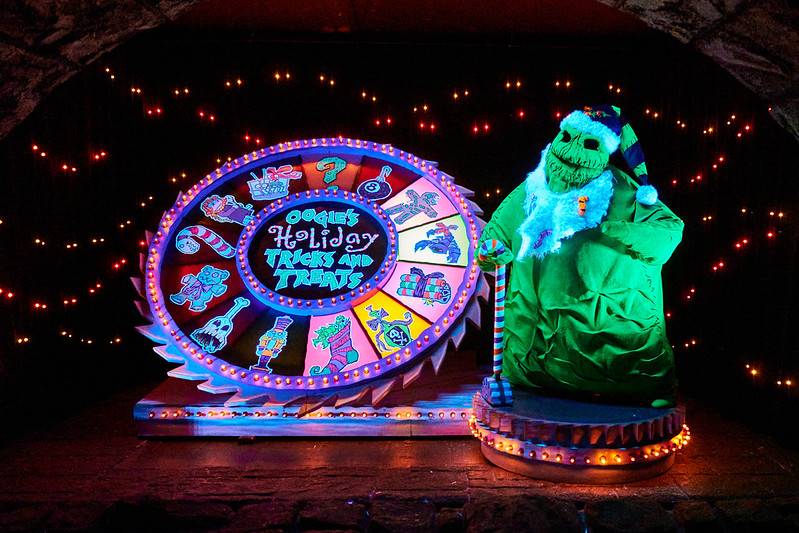
This attraction is a visual feast. Each room bursts with detail—from the changing portraits to the ghosts in the graveyard. Don’t miss the gingerbread house centerpiece in the ballroom (it’s redesigned every year), or the eerie charm of Jack Skellington, Sally, and Oogie Boogie as well as holiday makeovers of the classic mansion haunts like Madame Leota and the Hatbox Ghost.
If the ride slows or stops—lucky you! That’s your best chance for longer exposures without the motion blur. Take advantage of those pauses to steady your camera and capture details that are normally gone in a flash.
A Season Between Seasons
Haunted Mansion Holiday is a perfect example of Disney design—where spooky and merry coexist beautifully. It gives guests a way to celebrate both Halloween and Christmas without skipping a beat, and for photographers, it’s one of the richest attractions to challenge your skills and creativity.
So next time you find yourself between pumpkins and presents, keep your camera ready. You might just capture the shot that bridges both worlds.
🎃✨ Want to keep the magic going year-round?
Join the Fairy Tale Photo Academy Theme Park Photography Community—a free group where you can share your favorite park photos, get inspired by others, and meet fellow fans who love turning theme park moments into lasting memories. Come hang out, learn, and share your magic!


