
Fireworks, Drone Shows, and the Magic of Theme Park Nights
Whether you are celebrating Canada Day, Independence Day, or simply enjoying a summer evening at your favorite theme park, there is something magical about ending the day by looking up at the night sky. It seems fitting that Canada Day on July 1 and Independence Day on July 4 fall within just a few days of one another this week, because both celebrations often conclude with spectacular nighttime entertainment.
For generations that has meant fireworks. Today, many communities and theme parks are also embracing drone shows, where hundreds or even thousands of illuminated drones come together to create animated pictures in the sky. While the technology may be different, both experiences create the same sense of wonder that makes people stop, look up, and simply enjoy the moment.
They also present some wonderful opportunities for photography.
One of the biggest pieces of advice I can offer is to think about your location long before the show actually begins. Most people spend their time deciding where they will get the clearest view of the sky. While that is certainly important, I would encourage you to spend just as much time thinking about what will be in the foreground of your photo.
Why does that matter?
Because foreground elements give your photograph context.
A photograph of fireworks exploding against a black sky may be colorful, but it could have been taken almost anywhere in the world. Without context, the viewer has no emotional connection to the place. The image becomes a nice picture of fireworks instead of a memory from a specific experience.
Years ago, I photographed Disneyland's fireworks from the top level of the Mickey and Friends parking garage. Technically, the photos turned out very well. The bursts were sharp and colorful, and I captured several beautiful explosions.
The problem was they were also surprisingly boring.
If I had not told you they were Disneyland fireworks, you never would have known. There was nothing in the frame that connected those explosions to one of the most recognizable theme parks in the world. I learned a valuable lesson that night.
Context is what makes fireworks photographs memorable.
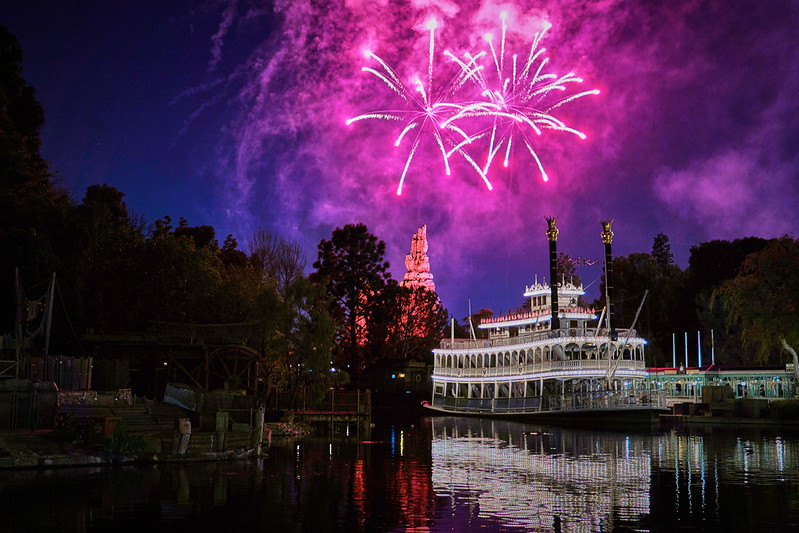
Whenever possible, look for an iconic foreground that helps tell the story of where you are. If you happen to be photographing a local celebration, perhaps there is a historic building, a church steeple, a lighthouse, or a bridge that can anchor your composition. I am personally a fan of finding a body of water whenever possible because reflections often double the visual impact of both fireworks and drone shows.
If you are visiting a theme park, your opportunities become even more exciting. At Disneyland you might choose Sleeping Beauty Castle, Main Street USA, the Rivers of America, or even Star Wars Galaxy's Edge as the foreground for your composition. Those instantly recognizable locations tell viewers exactly where the celebration is taking place and help transform the photograph into a memory instead of simply a picture.
Once you have found your composition, it is time to think about your camera.
A tripod is one of the most valuable tools you can bring for nighttime photography. Fireworks are not just about capturing the bright explosion itself. Part of their beauty comes from the graceful streaks of light that spread across the sky. Leaving the shutter open just a little longer allows those trails to become part of the final image.
Keeping the camera perfectly still also allows your foreground to remain sharp and detailed.
If you have a remote shutter release, I highly recommend using it. Pressing the shutter button by hand can introduce small vibrations that soften your images. If you do not have a remote, many cameras allow you to use an interval timer or time lapse mode. Simply let the camera continue taking photographs throughout the show and enjoy the performance while your camera does the work.
For photographers looking to experiment even further, there are accessories called lightning triggers that can detect sudden bursts of light and automatically trigger your camera at the moment fireworks explode. They are not essential, but they can certainly be fun to experiment with if fireworks photography becomes one of your favorite hobbies.
Fireworks have another challenge that many first time photographers do not anticipate.
Smoke.
As the show continues, every explosion leaves behind a little more smoke in the sky. Eventually that smoke begins to soften the colors and reduce the clarity of later fireworks.
That is why I always encourage people to make the most of the opening moments of the show. The first few minutes often produce the cleanest, most vibrant photographs before the sky becomes hazy.
One trick I occasionally use is placing a low strength neutral density filter over the lens. You can think of it as sunglasses for your camera. Fireworks create incredibly bright bursts against a very dark background. The filter helps reduce the intensity of those brightest flashes, lowering the chances of blowing out highlights.
Editing software can rescue many mistakes, but once highlights become completely overexposed, that detail is usually gone forever.
Drone shows are a little different.
Since there are no explosions, there is no smoke gradually filling the sky. That means the quality of your photographs can remain consistent throughout the performance. Drone formations also tend to be less intensely bright than fireworks, so there is generally less need for neutral density filters.
One thing both fireworks and drone shows have in common is that timing matters. Longer exposures anwhere from one to five seconds long give your camera the chance to capture as much of each blast at its full bloom or as hundreds of drones complete a recognizable shape.
One final suggestion is something that applies to almost every type of photography.
Take a few moments to simply enjoy the show.
It can be tempting to spend the entire performance looking through the back of your camera, constantly checking every image. Capture the photos you came for, but remember to put the camera down from time to time. Some memories deserve to be experienced with your own eyes rather than through a viewfinder.
Whether you spend your summer evenings photographing fireworks above your hometown, celebrating Canada Day, Independence Day, or enjoying a spectacular nighttime show at your favorite theme park, these events offer wonderful opportunities to combine technical photography skills with unforgettable memories.
The next time the lights go down and everyone begins looking toward the sky, be ready. With a little planning, a thoughtful foreground, and a bit of patience, you can create photographs that transport you right back to that magical evening every time you see them.
If you capture a fireworks or drone show this summer, we would love to see it. Join us in the Fairy Tale Photo Academy community on Skool and share your favorite nighttime photographs. Whether they were taken at a theme park, your local Canada Day celebration, an Independence Day festival, or any other summer event, come inspire fellow photographers and celebrate the magic we can all create after the sun goes down.


