
Capture Real Emotions In Faceless Portraits In Theme Parks
When most people think about vacation portraits, they picture everyone smiling at the camera in front of a famous landmark. There is certainly a place for those photos. They become wonderful reminders of who was there and where you visited together.
But if every photo from your trip has everyone looking directly into the camera, you may be missing an opportunity to tell a different kind of story.
One of my favorite ways to add variety to a collection of travel photos is by capturing what is often called a faceless portrait. Rather than photographing your friends or family from the front, photograph them from behind so the viewer sees what they are seeing. You might also hear this described as an over the shoulder photograph.
The beauty of this technique is that it invites the viewer to step into the scene. Instead of looking at someone posing for a camera, they almost feel as though they are standing beside them, sharing the same experience.
Even without seeing a person's face, we are remarkably good at reading emotion through body language. A child standing on tiptoes while watching a parade instantly communicates excitement. A couple leaning into one another while watching fireworks conveys warmth, affection, and connection. A family standing quietly in front of a castle can communicate wonder without anyone ever looking toward the camera.
That is one of the things I love most about this style of photography. It often feels more authentic. It gives the impression that the photographer quietly captured a genuine moment rather than asking everyone to stop, smile, and pose.
Whether the moment was completely spontaneous or gently staged really does not matter. Since the viewer cannot see anyone's facial expressions, the photograph feels natural and candid. It becomes less about posing and more about experiencing.
One of the creative choices you get to make is deciding how much of your subjects to include in the frame.
If you fill more of the frame with the people, they become the clear subject of the photograph while the background simply hints at where they are. I particularly enjoy this approach with couples because it emphasizes their relationship while still suggesting the location through a softly blurred background.
Other times I prefer to keep everything in focus. In those photographs the scenery becomes just as important as the people. The viewers are invited to admire both the destination and the people enjoying it. The location helps tell the story just as much as the people do.
Theme parks offer countless opportunities for this style of photography.
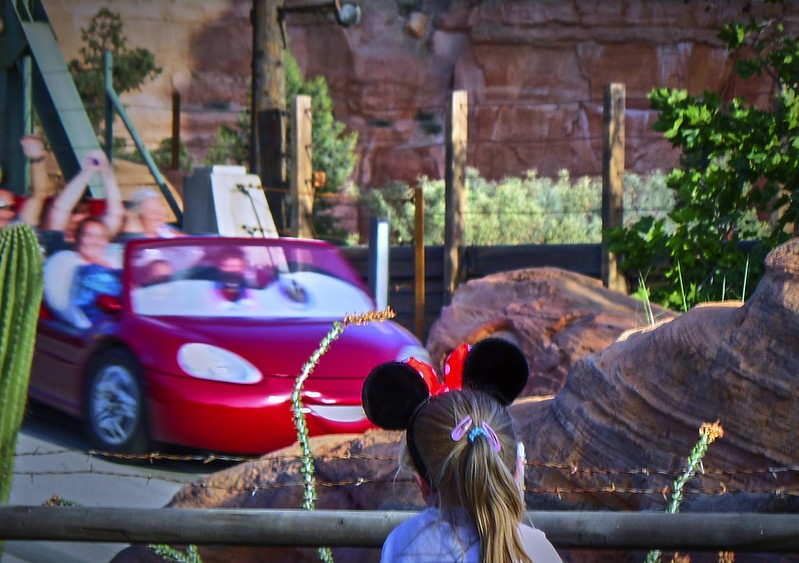
Iconic castles, famous attractions, parade routes, nighttime spectaculars, beautifully themed lands, and scenic overlooks all make wonderful backgrounds. The cover photo for this article features a young girl wearing Mickey ears as she watches guests race past on Radiator Springs Racers at Disney California Adventure. Rather than photographing the attraction by itself, including her in the foreground helps tell the story of discovery and anticipation. We are no longer simply looking at an attraction. We are experiencing it through her eyes.
One of my favorite aspects of faceless portraits is that they work beautifully later in the day when everyone has been walking for hours.
By that point, people may be tired. Hair may not look quite as perfect as it did that morning. Makeup may have faded in the afternoon heat. Someone may have spilled lunch on their shirt. Young children might be reaching the end of their patience, and grandparents may simply be ready for a well deserved rest.
Instead of asking everyone for one more smile, simply let them enjoy the moment while you quietly photograph them from behind.
Later, when you look back through your vacation photos, you will probably remember how everyone felt far more than whether their hair was perfect. The little imperfections disappear, replaced by the emotional connection the photograph captures.
Another tip is to pay attention to where your subjects are looking. Our eyes naturally follow the direction another person is facing. If your subjects are looking toward a castle, fireworks, or an attraction, your viewers will instinctively look there too. This creates a natural visual path through your photograph without you having to do anything else.
Leading lines can also strengthen these images. Walkways, bridges, railings, and even rows of flowers can naturally guide the viewer's eye from the people in the foreground toward the destination in the distance. Theme park designers are masters at creating these visual pathways, so take advantage of the work they have already done.
Timing can make all the difference as well. Rather than photographing someone while they are walking, wait until they naturally pause to take in the view. Those quiet moments often carry the strongest emotional impact because they communicate that your subjects are appreciating where they are instead of simply passing through.
The wonderful thing about this technique is that you do not need to wait until your next vacation to practice it. Visit your favorite neighborhood park. Walk along the beach. Explore your local downtown. Ask a friend or family member to stop for a moment and simply enjoy the view while you photograph them from behind. You may be surprised how quickly this approach changes the way you tell stories with your camera.
Photography is about more than recording what people look like. Sometimes the strongest photographs are the ones that capture what people were feeling. You do not always need to see someone's face to feel their excitement, their curiosity, or their sense of wonder.
If you give this technique a try, I would love to see your results. Join us in the Fairy Tale Photo Academy community on Skool and share your favorite faceless portraits from your theme park adventures. If you are not visiting a theme park anytime soon, practice in your own neighborhood and share those photographs instead. Sometimes the best way to tell the story of a place is simply to show someone experiencing it.


